Saturday, September 7, 2013

Wednesday, September 4, 2013
How to Make Homemade Laundry Detergent
Sunday, August 1, 2010
How to Make Homemade Laundry Detergent
In the spirit of Laura Ingalls, with wash day being Monday, here's a little recipe for homemade laundry detergent you can use tomorrow, Monday!
wash on Monday
iron on Tuesday
mend on Wednesday
churn on Thursday
clean on Friday
bake on Saturday
rest on Sunday
from Little House in the Big Woods
iron on Tuesday
mend on Wednesday
churn on Thursday
clean on Friday
bake on Saturday
rest on Sunday
from Little House in the Big Woods
* I use these utensils for detergent making only. They all stay in the pot until I make a new batch.
You will need:
1 bar of soap (any kind you want)
1 cup of Borax
1 cup of washing soda
a big pot ( that holds more than 2 gallons)
a grater
a funnel
a long spoon
2 empty gallon jugs/containers
 Grate your bar of soap into your pot.
 Fill one gallon jug and pour water into pot with grated soap. Cook until the grated soap dissolves.
 Add the Borax and washing soda.
 Bring to a boil. It will coagulate.
 Turn off the heat. Add 1 gallon of cold water. Stir well.
 Pour 1 gallon of your detergent into each container.
 A funnel helps tremendously.
 Now you have 2 gallons of homemade laundry detergent. I use 1/2 cup per load. With the prices of detergent being outrageous, I feel really happy every time I make a batch of this.
This won't make many, if any, suds. Suds don't equal clean. It took a while to get that into my head. This detergent cleans wonderfully!
Let me know if you make any or if you have any questions.
Happy washing!
You will need:
1 bar of soap (any kind you want)
1 cup of Borax
1 cup of washing soda
a big pot ( that holds more than 2 gallons)
a grater
a funnel
a long spoon
2 empty gallon jugs/containers
 Grate your bar of soap into your pot.
 Fill one gallon jug and pour water into pot with grated soap. Cook until the grated soap dissolves.
 Add the Borax and washing soda.
 Bring to a boil. It will coagulate.
 Turn off the heat. Add 1 gallon of cold water. Stir well.
 Pour 1 gallon of your detergent into each container.
 A funnel helps tremendously.
 Now you have 2 gallons of homemade laundry detergent. I use 1/2 cup per load. With the prices of detergent being outrageous, I feel really happy every time I make a batch of this.
This won't make many, if any, suds. Suds don't equal clean. It took a while to get that into my head. This detergent cleans wonderfully!
Let me know if you make any or if you have any questions.
Happy washing!


Elder's Meditation of the Day September 4

| Elder's Meditation of the Day September 4 | |
| "the Elders say that if you want something good, you have to suffer for it." |  |
| --Chuck Ross, LAKOTA | |
| People sometimes have a misconception of sacrifice. This is a strong word for Indian people. On the other side of sacrifice is another whole world. During sacrifice, our beliefs are tested. We may all have good beliefs but if you test a good belief, then you get real beliefs. Real beliefs make new people; real beliefs make new self images. Real beliefs allow determination and desires and faith to come true. Good is always available to us but we often can't bring it within until we let go of the old ways. We let go of the old ways by suffering. Suffering is only letting go of things that don't work anymore. On the other side of suffering is a new world. | |
Creator, help me to let go of old ways. Let my old thoughts and beliefs be abandoned. Every change is preceded by struggle. Help me go through the struggle today.
Tuesday, September 3, 2013
Five Common Mistakes Made When Feeding A Horse
Five Common Mistakes Made When Feeding A Horse
July 14, 2013
A Healthy Horse is a Happy Horse, Equine Nutrition Nerd American English, Animal, Best Management Practices,BMP, Calibri, composting, Diet (nutrition), Easy keeper, eco,environment, equine, equine health, Equine nutrition, farm call,farm sustainability, green, green farm, green horse, Health, Horse,horseback riding, horsecare, hunter lessons, manure, Nutrition,nutritional evaluation, pasture, pasture management, phone consultation, pollution control, pony, ponycare, riding, riding lesson, saddle, sustainability, Weight loss 25 Comments

In my travels as a certified FeedMaster™ equine nutrition specialist I visited 100s of horse farms. I witnessed over and over some simple “mistakes” that horse owners make that really can impact their horse’s health and the value of their nutrition program. 99% of the time it was due to lack of knowledge therefore I thought I would share some insight that I have learned to be true on this subject.
1) They don’t feed the correct diet for breed, age, health or activity:
I always like to use analogies in my attempt to get people to understand the complexities of equine nutrition. So here goes. You wouldn’t think a guy who sits on the couch all day would need the same diet as a guy who is a marathon runner…right? Right. The same is true for horses.
The quarter horse that gets  an occasional trail ride has different dietary needs than a three star event horse. Someone who has diabetes will have a different diet than someone who is not as sensitive to sugars. The same is true for our equine friends; a horse with insulin resistance cannot eat the same diet as one without. One more analogy to sink this in…A person with a high metabolism (yeah, the naturally skinny people) can eat things that someone with a slow metabolism can’t.
 an occasional trail ride has different dietary needs than a three star event horse. Someone who has diabetes will have a different diet than someone who is not as sensitive to sugars. The same is true for our equine friends; a horse with insulin resistance cannot eat the same diet as one without. One more analogy to sink this in…A person with a high metabolism (yeah, the naturally skinny people) can eat things that someone with a slow metabolism can’t.
Different types of feeds and the different kinds of hay all have differing caloric values, fat and fiber content. I truly believe that there is a feed for every need now on the market. This makes is super easy to feed the correct diet. The correct diet depends on a variety of specific things for EACH animal on your farm. The most important concerns that can influence the horse’s diet include:
- Stress from training, competing and shipping- Usually increases caloric demands and can create ulcers that inhibit absorption
- Disease or injury- Is the horse sick? Has he recently been injured and is now stall bound? Both influence dietary needs so must be accounted for and diet adjustedLet me in Your Bucket!
- Becoming a “senior” horse- They usually don’t metabolize as well due to digestive problems, dental condition and health issues
- Metabolism- “Easy keeper” vs. “Hard keeper”
- Weather or environment- Are they exposed to cold? This will increase caloric requirements.
- Management or housing- Does the horse live in a group setting where he is a part of a pecking order? Do they have their own stall to eat in or are they doing the fence feeder shuffle?
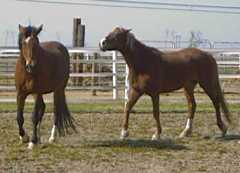
If you have a variety of ages, uses and types of influences (see above) you can tailor your feed programfor each horse with simple solutions that don’t require 14 different feedbins in the feedroom.
More on that later in the post…..
The National Research Council (the people that determine human nutritional needs too) have created a wonderful calculator to help any horse owner determine the correct amount of nutrients for their horse. This calculator allows you to input age, sex, workload, and current weight and other info and it will give you the amount of nutrients. Try it and get a feeling of where the nutritional needs are for your horse. http://nrc88.nas.edu/nrh/
2) They feed by volume not by weight:
Just like humans (and most creatures) horses need a certain amount of calories per day to maintain their weight. The average human female can eat 2,000 calories per day and maintain her weight. The average man 3,000. If the person is exercising or eating a restricted diet these caloric limits can change from thismaintenance level. If a person is sick or their lifestyle has recently changed their nutritional demands will need to change. Horses are much the same. It’s pretty simple though …Calories in. Calories out.
The chart below shows the daily calorie needs of the average 1,000 pound horse:

You can see that a horse in work hasdouble the caloric need than maintenance. There are three things to know in order to adjust the amount of calories in your horses’ feeding program; first you need to know the current weight of your horse, next you need to understand the caloric value of your feed and hay and lastly, you need to know what an actual pound of your grain and hay looks like. Much like a human on a diet, to stick to a 1,500 calorie/day diet you will need to know how many calories are in a serving of the food you are eating!!

How much grain is in that scoop?
It’s easy to get this number though, you can invest $15 in a food scale or you can put a “scoop” (whatever you use) of your grain into a gallon bag and take it with you to the grocery store. Use the veggie scale and there, you have the pounds per “scoop”.
You can easily calculate the weight of a “flake” (slices, pads) of hay by standing on a bathroom scale, recording your weight, step back on the scale while holding the bale of hay. Subtract your weight from the total to determine the weight of the bale. Cut open the bale and count the number of “flakes” that are there. It’s not perfect science but it’s close enough. Now divide the number of flakes into the weight of the bale. There, you have the weight of a flake.
Here are some average caloric values of common feed stuff found in the equine diet:

Why is this important? For optimal health, horses need to eat 1 to 1.5% of their body weight in hay or pasture grasses and legumes daily to reach the calories they need to live. Horses will generally eat about 1-1.4 lbs. of pasture grasses and legumes per hour on a dry matter basis. Therefore, if they don’t have that, the rest of their calories should come from a grain supplement.
So let’s figure this out. First, weigh your horse using a weight tape. Now, figure out how much your horse is eating in hay and grain from your weight calculations. You should see if you are on target and what’s off if you are having trouble maintaining a healthy weight.
For example, if your horse weighs 1,000 lbs. and he’s doing nothing he needs 15,000 calories per day to maintain his weight. If you are giving him 20 pounds of good hay per day (roughly 6 flakes) that equals 16,884 calories. Add any grain you might give him (for example 2 pounds at 1,500 calories a pound) and you’ve added another 3,000 calories for a total of 19,884! Too much for a horse not in work!
Even if you don’t want to count calories you should still know how much your feed weighs and feed by weight. Simple formula. A horse needs 2% of body weight in feedstuff (hay alone and maybe grain) per day. So if you don’t know what anything weighs how do you know how much you are feeding?
3) They don’t realize that the foundation of a horse’s diet is fiber:

Contently munching
Too many horsemen forget this important fact and only concentrate on the value of the grain part of their horse’s diet. In fact, many horses really don’t even need any grain in their diet. Those with good quality forage can easily get along on just pasture or hay. They are designed to eat this type of food so they are efficient at digesting it and getting the nutrients from it. Of course if they have any of the influencers I mention in the first part of this post, then a balanced approach to their ration might be necessary. Adding grain for a supplemental source of calories and nutrients for the hard working or pregnant horse, subtracting quantity of forage but adding a forage balancer for those with restricted diets.
Basically, if the horse can’t meet his nutrient requirements with hay or pasture, then you add grain to his diet.
This is where horsemen tend to go astray. They usually make one of these common mistakes (sometimes both!); they buy the cheapest hay they can find and then feed grain because the horse doesn’t thrive; or they overstock (and overgraze) the pastures so the horse gets little to no nutrients from the grass.
This is big and can end up costing more money and can contribute to health problems. As you can tell, I like to make human comparisons. Seems to help humans understand. So here goes. If a person is designed to eat a well-balanced diet of fruit, veggies, protein and carbs but eats too much fat, sugar and starch what happens? They get fat. They can get sick. Conversely if they don’t eat enough good calories they get thin. They get sick.
Horses thrive on forage. It’s good for their inside, they metabolize it better, extract more nutrients from it and it helps them avoid common grain related illnesses like colic and ulcers.

Eating the trees
Eating forage is also good for their brains. Without enough grass or hay to graze they can develop behaviors to simulate the grazing behavior, like fence or tree chewing. Damage which costs money to fix.
Feed good forage and you will feed less. For example, calorie dense alfalfa requires less as the horse can naturally digest it better than grain. The problem with crappy, cheap hay and it has too much lignon in it which fills them up but has very few nutrients. It takes longer to get through their system so they get too full, stop eating, and waste hay. (Last human comparison for now) Think of white bread. You get full on it but it’s not going to make your hair shiny.
So feed forage first!! The good stuff! Give your horse what he was designed to eat. You might just save yourself some moolah too!
4) They try to starve a fat horse skinny:
Living in Virginia I see a lot of good pasture. Horses gorging on grass until they get obese. Then I get the call to come and help them figure out what to do. Usually when I get there they have put the horse into a “starvation” paddock with little to no grass. They also usually tell me “I only give him a handful of grain a day!”

Free roamin’
Even the domesticated horse is happiest when he can munch away the day. Excessively restricting his access to food may cause a stress response that some researchers are linking to obesity in these easy keeping breeds. When a horse is hungry (and all horses would be hungry with a flake of hay and a “handful” of grain per day!) he worries about his next meal.
Searching for their next meal is an innate trait in horses because in nature all they really have to think about is finding enough to eat to survive. Putting an easy-keeper in a starvation paddock and removing most of the food from his diet can send them into starvation mode, which basically tells his body to conserve because he is starving. It might even lower their metabolism permanently and lead to undesirable behavior.

He can still eat
The best way to feed these horses is by slowing them down. By restricting the amount theyconsume but allowing them to behave the way they normally would. Using grazing muzzlesand slow feeders goes A LONG WAY in helping these horses maintain a normal weight. Allowing them to graze through these devices allows them to avoid the stress of being hungry.
It’s like a person  . If you restrict a person’s food intake in an effort to lower calories they ultimately fail in their weight loss. They get stressed out by the amount of food they don’t get to eat. They get grumpy.
. If you restrict a person’s food intake in an effort to lower calories they ultimately fail in their weight loss. They get stressed out by the amount of food they don’t get to eat. They get grumpy.
Small openings slow them down
Slow feeders are also perfect for the horse confined to the paddock, the horse that is stall bound and the horse that bolts its feed! There are many options out there from simple hay nets with smaller holes to elaborate boxes with grates.
One final note: If you are going to feed “a handful of grain” make it at least be a highly concentrated supplement that offers a full source of the horses’ daily nutrient requirement in a small amount.

It’s not the Protein!
5) They think that protein makes their horse crazy:
This is a big one. I am not sure where it started but I have heard this all my life. Horsepeople are so geared toward thinking “protein” that they usually reply “A 10%” when asked what they feed. 10% what? Protein? Fat? Fiber? They are all equally important. But no it’s always protein they are referring to.
Poor protein. Such a bad rap. The truth is though it’s really important and the correct amount is necessary for metabolizing nutrients, muscle development during growth, muscle repair during exercise and in the aging equine.
The main building blocks of protein are amino acids. These building blocks connect and offer a horse the foundation for good bone and muscles. Most adult horses only require 8 to 10% protein in the total ration, but a higher protein is important for a horse in work, lactating mares, young growing foals and the senior.
When horse owners believe that protein causes a horse to get “hot” they tend to underfeed it. I see a lot of horses that are “ribby” and have no topline but have huge bellies. This is the typical horse that is lacking sufficient protein. The horse owner usually feeds average hay (low in protein) and a 10% grain but not at the rate suggested by the formulation to reach the 10% ration. The horse I usually see in this condition is either in has extra stress (thus extra nutrient requirements) such as regular work, is a baby or is old. The protein requirements for these horses is usually 14% or more.

Typical Horse With Protein Deficiency
Here’s why:
Working horses need fuel to perform as well as repair the breakdown of muscle from work. Think of the human weight builder (I know another human comparison!). What is the first thing they consume after lifting? Protein. To rebuild what they just tore down during their workout. Same with horses.
The young horse needs a higher protein for the development of bone and muscle. Without a good foundation of the amino acids (building blocks) from protein, they have nothing to build their body with. I see so many foals with obvious protein deficiencies due to the owner being afraid of overfeeding protein.
Older horses need a higher protein because they cannot metabolize their food as efficiently (from teeth and other age related issues) so they don’t absorb as much nutrients from their diet. Anything old is less efficient than when it’s young, and I should know  Unfortunately, these guys usually get the “Oh, I don’t worry ’bout him as much because I don’t use him.” Truth is, due to the natural aging process, an older equine probably needs more of an owner’s attention.
Unfortunately, these guys usually get the “Oh, I don’t worry ’bout him as much because I don’t use him.” Truth is, due to the natural aging process, an older equine probably needs more of an owner’s attention.
It’s hard to overfeed protein. However, because horses pee out what they don’t need excess protein can result in increased water intake and urination.
Formulated feeds are designed by experts to provide the correct levels of protein each horse needs according to their age and use. This is why formulas for athletes, growing and seniors usually have at least 14% protein. Be sure to calculate the protein content of your hay into the total daily ration before you decide on a feed though.
I hope you found some useful information in this post!
~til we meet again.
Whitestone Hill, North Dakota

150 years ago, on Sept. 3, 1863, has been largely forgotten, as if swept from collective memory. The Dakota and Lakota, the incident was so painful that it remained submerged for many years. For whites, Whitestone Hill was overshadowed by the cataclysmic Civil War. (seems many massacres were overshadowed by Lincoln's civil war. it hasn't been forgotten, another battle then a large monument was erected for the dead soldiers. lincoln cleared the way as planned)
Whitestone Hill: Was N.D.’s deadliest conflict, 150 years ago.
It stands as the deadliest conflict ever recorded on North Dakota soil. Between 100 and 300 Dakota and Lakota Sioux men, women and children were killed, and 20 soldiers died from their wounds.
After the fighting stopped, soldiers lingered for two days, burning teepees, shooting dogs as well as wounded horses and burning the Indians’ food and belongings.
An immense mound of buffalo meat – half a million pounds being dried for winter provisions – was burned. The melted tallow ran in streams down the hilly terrain. The acts of destruction ensured that even the survivors were condemned to hunger and hardship as they scattered after the attack on a sprawling Sioux encampment in Dakota Territory. But what happened on this lonely patch of rolling prairie 150 years ago, on Sept. 3, 1863, has been largely forgotten, as if swept from collective memory. The Dakota and Lakota, the incident was so painful that it remained submerged for many years. For whites, Whitestone Hill was overshadowed by the cataclysmic Civil War. The 150th anniversary observance, held last week, aimed to change that, to help heal historical wounds among descendants of the victims.
Efforts to nominate Whitestone Hill to the National Register of Historic Places have prompted a deeper examination in recent years about the enormous human suffering that came from the clash and a reappraisal of what happened and why. The U.S. Army, which was carrying out reprisal raids following the deadly 1862 Minnesota Uprising, called it the Battle of Whitestone Hill. Today, in fact, the National Park Service recognizes the site – which is in Dickey County, a 90-minute drive south from Jamestown – as a Civil War battlefield.
Descendants of the Dakota and Lakota Sioux, many of them from Yanktonai bands, use a different word to describe what happened here. They call it a massacre, with human consequences still felt today.
‘Basically forgotten’
Mary Big Moccasin had spent some glorious late summer days playing children’s games.
Her family was among the 4,000 Sioux, mostly Yanktonais and Hunkpatina, who had gathered for a late summer ritual, a trade rendezvous and buffalo hunt.
Late one afternoon, as the annual event was winding down, men in blue uniforms came swooping into her teepee village on horseback, shooting indiscriminately and surrounding the camp.
The 9-year-old girl, who became separated from her family, was unable to escape unscathed. She was shot in the leg, but was able to crawl to safety in a ravine, where she hid for several days.
She watched as the soldiers shot dogs and wounded horses and heard the cries of women and children. She was taken prisoner and held for seven years.
As an old woman, she sometimes woke up from a nightmare, screaming, “Run, run, the soldiers are coming!”
Many years later, her great-great granddaughter, Ladonna Brave Bull Allard, came across Mary Big Moccasin’s account in an archive – where she also read that the site of the conflict, whose precise location had been forgotten, was discovered 20 years later when a settler was picking up buffalo bones and discovered they were mixed with human bones.
“Oh my God, these are our relatives!” Brave Bull Allard said, recalling her reaction.
Some Indians who were killed were hastily buried, some beneath stones, but their grave locations never were recorded.
“There has never been a concrete answer” about what happened to the remains, she said. Some bodies might have been burned, she added, and some human bones likely were picked up with buffalo bones to be sold and ground into fertilizer.
The Yanktonais Sioux bands, sometimes referred to as Nakota, were widely dispersed after Whitestone, permanently separating many families whose members ended up in far-flung locations, Brave Bull Allard said.
Soldiers captured 156 women, children and old men and marched them to Fort Thompson on the Crow Creek Reservation in South Dakota, where they were held as prisoners of war. Some of their descendants still live there.
Others fled to the Devils Lake area in North Dakota, Fort Peck, Mont., or Canada to join relatives. Still others, including some of Brave Bull Allard’s relatives, later ended up at the Standing Rock Reservation.
Extended family connections lost over the years are only now being pieced together through genealogical research that Brave Bull Allard and others are helping to compile.
“After Whitestone our families separated,” she said. “We are trying to find our relatives again.”
The Yanktonais, once one of the most powerful tribes of the northern Plains, who had made their home for many years in the James River Valley, never fully recovered after Whitestone Hill. The scattered bands do not have a reservation of their own.
“The ripple effects are still all around,” Brave Bull Allard said. “We (Yanktonais) have never been given anything for the loss of our land. We never signed a treaty. We’ve been basically forgotten.”
Observances evolving
Thomas Marshall, then a congressman representing North Dakota, secured a federal grant to buy 640 acres and rebury the 20 soldiers killed at Whitestone Hill.
A 30-foot granite monument topped by a bugler was erected, encircled by the soldiers’ graves on a hilltop. Marshall spoke when the memorial park was dedicated in 1914, an event attended by thousands.
For Marshall, the violence Whitestone Hill was justifiable. It cleared the way for white settlers, whom he viewed as superior to the Indians who were killed or displaced and later confined to reservations.
Lightning struck the monument in 1922, and later the North Dakota Legislature appropriated $500 for repairs to what was maintained for years as a state park.
In 1942, during dedication of improvements built by Depression-era Works Progress Administration laborers, a small concrete cairn of field stones was erected in memory to the Indians who died.
Two decades later, 6,000 spectators turned out for a two-day observance of the Whitestone centennial in 1963. The anniversary weekend, hosted by six neighboring communities, had a celebratory air. Events included a rodeo with a capacity crowd and traditional dances by students at the Indian boarding school in Wahpeton.
In recent years, the State Historical Society of North Dakota has sponsored anniversary observances, often during Labor Day weekend, with educational programs about Whitestone Hill and related events.
This year, the Aug. 24 public observance of the milestone 150th anniversary was quiet and reflective. Brave Bull Allard, one of the tribal historians consulted for the report nominating the site for national historic recognition, served as a speaker. A buffalo dinner was served.
Today, which marks the actual anniversary date, Dakota and Lakota will gather at Whitestone Hill for a private observance.
“It’s the 150th year,” Brave Bull Allard said. “We need to heal. The repercussions of what happened 150 years ago are still happening today.”
Site ‘a touchy subject’
Today the conflict surrounding Whitestone Hill involves interpretation of the bloody conflict.
The controversy is one reason it has taken so long to prepare to nominate it for the National Register of Historic Places, said Tom Isern, a history professor at North Dakota State University who studies the Dakota Conflict in Dakota Territory.
“It’s a touchy subject,” he said. “This is the most controversial Dakota War site we have in North Dakota. There’s a greater sense of injustice around this site than any other.”
Some of the Hunkpapa Lakota at the encampment probably took part in earlier clashes, and some Santee Dakota resisters from Minnesota also were present, along with refugee Santees.
The Yanktonais, the most prevalent group at Whitestone Hill, had nothing to do with the Minnesota uprising, and have a justifiable grievance over the attack, Isern said.
For some, the discussion has moved beyond whether the clash was a battle or massacre.
Aaron Barth, who is writing his doctoral dissertation in history at NDSU about events including Whitestone Hill, prefers the term, borrowed from another historian, “site of memorial, site of mourning.”
Still, he believes what happened was a massacre, and notes the general who led the Army troops, Gen. Alfred Sully, himself termed it a “slaughter.”
Dakota Goodhouse, a member of the Standing Rock tribe whose ancestry is both Hunkpapa Lakota and Yanktonai, agrees. But he doesn’t press the point.
“That is what happened, but I don’t know if North Dakota is ready for that word,” Goodhouse said. “I think massacre is such a strong, powerful, negative word.
“Memorial has a connotation to it that demands respect,” he said. Today, Whitestone Hill should be a place of prayer and reflection, he said.
Goodhouse and Barth were on the team that compiled a detailed narrative history of Whitestone Hill for the State Historical Society of North Dakota, which is preparing the nomination for the national historic register.
The application went before a state review panel Friday. An earlier version was rejected in 2010 because it was deemed to rely too much on official army reports, with insufficient input from the tribes.
Conflicting accounts, drawn from such different cultures and perspectives, are inevitable and happen all the time, Barth said.
Trying to arrive at a complete understanding is important, he said, but no historical accounting will ever be satisfactory or definitive. He added:
“There’s never going to be closure on this.” By: Patrick Springer, Forum News Service
Grandmothers

Grandmothers
This a painting of my grandmothers. They came from different worlds but they were not so different when you come right down to it. They had similar stories, similar customs. It might be a product of living in the north, of long winters and short summers of nights that are cold and dark and lasting, but they both came from cultures who loved to tell stories, who were enamoured with design, colour and myth. And like all Grandmothers, they were the keepers of the fire.
The braid that ties them together includes my life down the middle, these threads intertwined forever. They reach down to the smudge bowl, the cleansing, the prayer the offering. And what is the prayer? A blessing for the seventh generation. There are seven tendrils of smoke, rising in their time.
The drums in the corners are bordered with knowledge, with writing. One in Cree syllabics, the other in Norse runes. Grandmothers impart this knowledge, they tell us our stories, they preserve our cultures and transmit them, keeping them vital.
I honour my Grandmothers. They were not perfect, they were human. And they gave to the generations who followed them everything they could, and so much more than they knew.
-------
The smudge bowl depicted in this painting was gift to me from my friend, the Blackfoot artist Terrance Houle, during the time we spent at the Banff Centre for the Arts in 2008.
-------
words&art: Aaron Paquette
http://www.facebook.com/
View this painting at:
http://

Hair and American Indians

Hair and American Indians
Man from Mohave Tribe (Photo)
What do you think of the article below?
"The Truth About Hair and Why Indians Would Keep Their Hair Long" --Reported by C. Young
This information about hair has been hidden from the public since the Viet Nam War.
Our culture leads people to believe that hair style is a matter of personal preference, that hair style is a matter of fashion and/or convenience, and that how people wear their hair is simply a cosmetic issue. Back in the Vietnam war however, an entirely different picture emerged, one that has been carefully covered up and hidden from public view.
In the early nineties, Sally [name changed to protect privacy] was married to a licensed psychologist who worked at a VA Medical hospital. He worked with combat veterans with PTSD, post traumatic stress disorder. Most of them had served in Vietnam.
Sally said, “I remember clearly an evening when my husband came back to our apartment on Doctor’s Circle carrying a thick official looking folder in his hands. Inside were hundreds of pages of certain studies commissioned by the government. He was in shock from the contents. What he read in those documents completely changed his life. From that moment on my conservative middle of the road husband grew his hair and beard and never cut them again. What is more, the VA Medical center let him do it, and other very conservative men in the staff followed his example.
As I read the documents, I learned why. It seems that during the Vietnam War special forces in the war department had sent undercover experts to comb American Indian Reservations looking for talented scouts, for tough young men trained to move stealthily through rough terrain. They were especially looking for men with outstanding, almost supernatural, tracking abilities. Before being approached, these carefully selected men were extensively documented as experts in tracking and survival.
With the usual enticements, the well proven smooth phrases used to enroll new recruits, some of these Indian trackers were then enlisted. Once enlisted, an amazing thing happened. Whatever talents and skills they had possessed on the reservation seemed to mysteriously disappear, as recruit after recruit failed to perform as expected in the field.
Serious causalities and failures of performance led the government to contract expensive testing of these recruits, and this is what was found.
When questioned about their failure to perform as expected, the older recruits replied consistently that when they received their required military haircuts, they could no longer ‘sense’ the enemy, they could no longer access a ‘sixth sense’, their ‘intuition’ no longer was reliable, they couldn’t ‘read’ subtle signs as well or access subtle extrasensory information.
So the testing institute recruited more Indian trackers, let them keep their long hair, and tested them in multiple areas. Then they would pair two men together who had received the same scores on all the tests. They would let one man in the pair keep his hair long, and gave the other man a military haircut. Then the two men retook the tests.
Time after time the man with long hair kept making high scores. Time after time, the man with the short hair failed the tests in which he had previously scored high scores.
Here is a Typical Test:
The recruit is sleeping out in the woods. An armed ‘enemy’ approaches the sleeping man. The long haired man is awakened out of his sleep by a strong sense of danger and gets away long before the enemy is close, long before any sounds from the approaching enemy are audible.
In another version of this test the long haired man senses an approach and somehow intuits that the enemy will perform a physical attack. He follows his ‘sixth sense’ and stays still, pretending to be sleeping, but quickly grabs the attacker and ‘kills’ him as the attacker reaches down to strangle him.
This same man, after having passed these and other tests, then received a military haircut and consistently failed these tests, and many other tests that he had previously passed.
So the document recommended that all Indian trackers be exempt from military haircuts. In fact, it required that trackers keep their hair long.”
WEBSITE SOURCE: The Hair Shaman
>>----> http://ow.ly/kupGS
Comment:
The mammalian body has evolved over millions of years. Survival skills of human and animal at times seem almost supernatural. Science is constantly coming up with more discoveries about the amazing abilities of man and animal to survive. Each part of the body has highly sensitive work to perform for the survival and well being of the body as a whole.The body has a reason for every part of itself.
Hair is an extension of the nervous system, it can be correctly seen as exteriorized nerves, a type of highly evolved ‘feelers’ or ‘antennae’ that transmit vast amounts of important information to the brain stem, the limbic system, and the neocortex.
Not only does hair in people, including facial hair in men, provide an information highway reaching the brain, hair also emits energy, the electromagnetic energy emitted by the brain into the outer environment. This has been seen in Kirlian photography when a person is photographed with long hair and then rephotographed after the hair is cut.
When hair is cut, receiving and sending transmissions to and from the environment are greatly hampered. This results in numbing-out .
Cutting of hair is a contributing factor to unawareness of environmental distress in local ecosystems. It is also a contributing factor to insensitivity in relationships of all kinds. It contributes to sexual frustration.
Conclusion:
In searching for solutions for the distress in our world, it may be time for us to consider that many of our most basic assumptions about reality are in error. It may be that a major part of the solution is looking at us in the face each morning when we see ourselves in the mirror.
....
WEBSITE SOURCE: The Hair Shaman
>>----> http://ow.ly/kupGS
Thank you Shonda Buchanan.
Man from Mohave Tribe (Photo)
What do you think of the article below?
"The Truth About Hair and Why Indians Would Keep Their Hair Long" --Reported by C. Young
This information about hair has been hidden from the public since the Viet Nam War.
Our culture leads people to believe that hair style is a matter of personal preference, that hair style is a matter of fashion and/or convenience, and that how people wear their hair is simply a cosmetic issue. Back in the Vietnam war however, an entirely different picture emerged, one that has been carefully covered up and hidden from public view.
In the early nineties, Sally [name changed to protect privacy] was married to a licensed psychologist who worked at a VA Medical hospital. He worked with combat veterans with PTSD, post traumatic stress disorder. Most of them had served in Vietnam.
Sally said, “I remember clearly an evening when my husband came back to our apartment on Doctor’s Circle carrying a thick official looking folder in his hands. Inside were hundreds of pages of certain studies commissioned by the government. He was in shock from the contents. What he read in those documents completely changed his life. From that moment on my conservative middle of the road husband grew his hair and beard and never cut them again. What is more, the VA Medical center let him do it, and other very conservative men in the staff followed his example.
As I read the documents, I learned why. It seems that during the Vietnam War special forces in the war department had sent undercover experts to comb American Indian Reservations looking for talented scouts, for tough young men trained to move stealthily through rough terrain. They were especially looking for men with outstanding, almost supernatural, tracking abilities. Before being approached, these carefully selected men were extensively documented as experts in tracking and survival.
With the usual enticements, the well proven smooth phrases used to enroll new recruits, some of these Indian trackers were then enlisted. Once enlisted, an amazing thing happened. Whatever talents and skills they had possessed on the reservation seemed to mysteriously disappear, as recruit after recruit failed to perform as expected in the field.
Serious causalities and failures of performance led the government to contract expensive testing of these recruits, and this is what was found.
When questioned about their failure to perform as expected, the older recruits replied consistently that when they received their required military haircuts, they could no longer ‘sense’ the enemy, they could no longer access a ‘sixth sense’, their ‘intuition’ no longer was reliable, they couldn’t ‘read’ subtle signs as well or access subtle extrasensory information.
So the testing institute recruited more Indian trackers, let them keep their long hair, and tested them in multiple areas. Then they would pair two men together who had received the same scores on all the tests. They would let one man in the pair keep his hair long, and gave the other man a military haircut. Then the two men retook the tests.
Time after time the man with long hair kept making high scores. Time after time, the man with the short hair failed the tests in which he had previously scored high scores.
Here is a Typical Test:
The recruit is sleeping out in the woods. An armed ‘enemy’ approaches the sleeping man. The long haired man is awakened out of his sleep by a strong sense of danger and gets away long before the enemy is close, long before any sounds from the approaching enemy are audible.
In another version of this test the long haired man senses an approach and somehow intuits that the enemy will perform a physical attack. He follows his ‘sixth sense’ and stays still, pretending to be sleeping, but quickly grabs the attacker and ‘kills’ him as the attacker reaches down to strangle him.
This same man, after having passed these and other tests, then received a military haircut and consistently failed these tests, and many other tests that he had previously passed.
So the document recommended that all Indian trackers be exempt from military haircuts. In fact, it required that trackers keep their hair long.”
WEBSITE SOURCE: The Hair Shaman
>>----> http://ow.ly/kupGS
Comment:
The mammalian body has evolved over millions of years. Survival skills of human and animal at times seem almost supernatural. Science is constantly coming up with more discoveries about the amazing abilities of man and animal to survive. Each part of the body has highly sensitive work to perform for the survival and well being of the body as a whole.The body has a reason for every part of itself.
Hair is an extension of the nervous system, it can be correctly seen as exteriorized nerves, a type of highly evolved ‘feelers’ or ‘antennae’ that transmit vast amounts of important information to the brain stem, the limbic system, and the neocortex.
Not only does hair in people, including facial hair in men, provide an information highway reaching the brain, hair also emits energy, the electromagnetic energy emitted by the brain into the outer environment. This has been seen in Kirlian photography when a person is photographed with long hair and then rephotographed after the hair is cut.
When hair is cut, receiving and sending transmissions to and from the environment are greatly hampered. This results in numbing-out .
Cutting of hair is a contributing factor to unawareness of environmental distress in local ecosystems. It is also a contributing factor to insensitivity in relationships of all kinds. It contributes to sexual frustration.
Conclusion:
In searching for solutions for the distress in our world, it may be time for us to consider that many of our most basic assumptions about reality are in error. It may be that a major part of the solution is looking at us in the face each morning when we see ourselves in the mirror.
....
WEBSITE SOURCE: The Hair Shaman
>>----> http://ow.ly/kupGS
Thank you Shonda Buchanan.
Elder's Meditation of the Day September 3
| Elder's Meditation of the Day September 3 | |
| "Once you have achieved this oneness, when you talk, God talks; when you act, God acts." | |
| --Chuck Ross, LAKOTA | |
| In my innermost self, I know this to be true. I know of this oneness. The more I am free of doubt, jealousy, judgment, selfishness, anger, the closer I am to this oneness. When I am right with the Creator, nothing can touch me. When I am right with the Creator I always say the right things. When I am right with the Creator, my thoughts are always good. When I am right with the Creator, my actions are always good. | |
Great Spirit, remove from me those things that block me from You. Allow me this day to experience the oneness.
Monday, September 2, 2013
Blacky the sway backed horse
http://www.townoftiburon.org/news/tiburons-famous-horse-blackies-last-stand-lives-on-by-jim-wood/

Elder's Meditation of the Day September 2
| Elder's Meditation of the Day September 2 | |
| "I remember Dawson (No Horse) said, 'Once you say your prayers, don't worry about them. If you worry about them, they'll just fade away.'" | |
| --Chuck Ross, LAKOTA | |
| Today I need to remember You are everywhere. I need to remember how much You love me. I need to know, Grandfathers, that You are always listening. Today I need to know how much You care. Today I will remember the advice of the Elders. "Say your prayers and then don't worry - know that the Great One has heard you." It's so much easier to do this, Grandfather, when I feel connected to You. | |
My Creator, allow me this day to feel your presence. Let me walk the path of life today and talk to You many times. Give me faith, my Grandfather.
Sunday, September 1, 2013
Sheldon National Wildlife Refuge
MORE HORSEBACK NEWS
Sheldon National Wildlife Refuge and America’s War Horses, The Ultimate Betrayal
by admin • • 5 Comments

Subscribe to:
Posts (Atom)