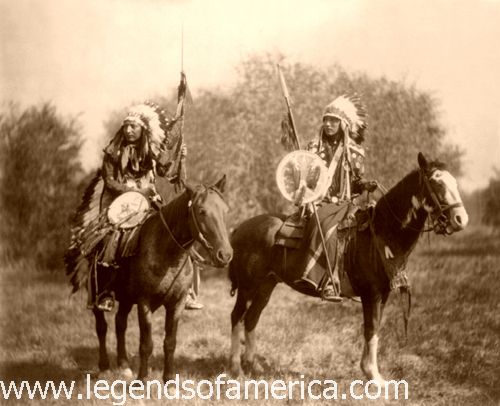
Sioux Indians, photo by Heyn, 1899.
This image available for photographic prints HERE!
|
There was a time when the land was sacred,
and the ancient ones were as one with it. A time when only the children of the Great
Spirit were here to light their fires in these
places with no boundaries...
In that time, when there were only simple ways, I saw with my heart the conflicts to come, and whether it was to be for good or bad, what was certain was that there would be change.
-The Great Spirit
| ||||||||||
| |||||||||||
War and battles were another underlying principle of the Sioux people, because through it, men gained prestige, and their prestige was reflected in the family honor.
The Lakota
Sometimes also spelled "Lakhota,” this group consists of seven tribes who were known as warriors and buffalo-hunters. Sometimes called the Tetons, meaning "prairie dwellers,” the seven tribes include:
| 
Sioux Tipis, 1902.
This image available for photographic prints HERE!
| ||||||||||
This band migrated west from Minnesota after the tribe began to use horses. There were about 20,000 Lakota in the mid 18th century, a number which has increased to about 70,000 today, of which approximately 1/3 still speak their ancestral language.
The Lakota were located in Minnesota when Europeans began to explore and settle the land in the 1600s. Living on small game, deer, and wild rice, they were surrounded by large rival tribes. Conflict with their enemy, the Ojibwa eventually forced the Lakota to move west. By the 1700s, the Lakota had acquired horses and flourished hunting buffalo on the high plains of Wisconsin, Iowa, the Dakotas, and as far north as Canada. The Tetons, the largest of the Lakotatribes dominated the region.
As white settlers continued to push west onto Sioux lands and multiple treaties were made and broken, the Sioux retaliated, resulting in three major wars and numerous other battles and skirmishes.
| |||||||||||
| The first major clash occurred in 1854 near Fort Laramie,Wyoming , when 19 U.S. soldiers were killed. In retaliation, in 1855 U.S. troops killed about 100 Sioux at their encampment in Nebraska and imprisoned their chief. In 1866-1867, Red Cloud’s War was fought that ended in a treaty granting theBlack Hills in perpetuity to the Sioux. The treaty, however, was not honored by the United States; gold prospectors and miners flooded the region in the 1870s. In the ensuing conflict, General George Armstrong Custer and 300 troops were killed at Little Bighorn on June 25, 1876, by the Sioux Chief Sitting Bull and his warriors. | 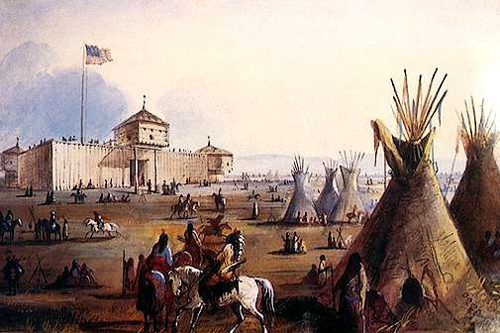
Fort Laramie painting by Alfred Jacob Miller,
Walters Art Gallery.
| ||||||||||
After that battle the Sioux separated into their various groups. The massacre by U.S. troops of about 150 to 370 Sioux men, women, and children at Wounded Knee in December 1890 marked the end of Sioux resistance until modern times.
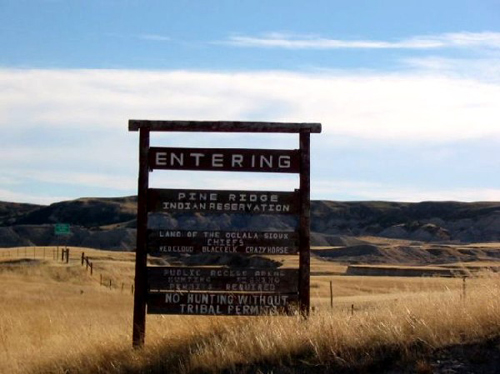
Today, the majority of the Lakota live at the 2,782 square mile Pine Ridge Reservation in southwestern South Dakota.
| |||||||||||

This image available for photographic prints HERE!
| 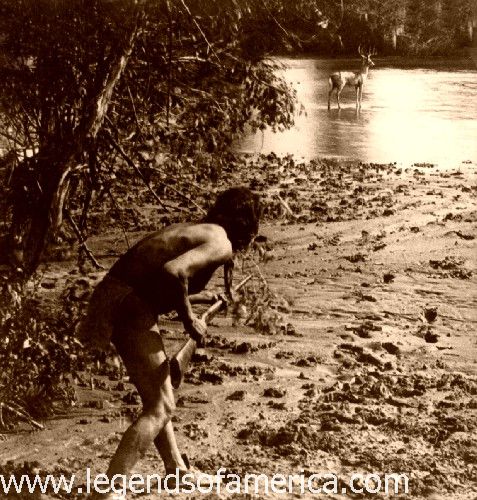
Sioux hunter, 1905.
| ||||||||||
Friday, January 31, 2014
Great Sioux Nation-----Lakota, Dakota, Nakota - The Great Sioux Nation


Elder's Meditation of the Day January 31

| Elder's Meditation of the Day January 31 | |
| "In sharing, in loving all and everything, one people naturally found a due portion of the thing they sought, while in fearing, the other found need of conquest." |  |
| --Chief Luther Standing Bear, SIOUX | |
| There are two systems of thought that are available for us to choose from. One is the love-thought system and the other is the fear- thought system. If we choose love, we will see the laws, principles and values of the Creator. If we choose fear, the results will be so paralyzing that it will cause us to take over and not rely on the Great Spirit. The fear-thought system will automatically cause attack, conflict, need to control over others. The love-thought system seeks peace of mind, unity and causes us to be love seekers. | |
Great Spirit, today let me see only love.
Thursday, January 30, 2014
Elder's Meditation of the Day January 30
| Elder's Meditation of the Day January 30 | |
| "Bright days and dark days were both expressions of the Great Mystery, and the Indian reveled in being close to the Great Holiness." | |
| --Chief Luther Standing Bear, SIOUX | |
| The Great Spirit created a world of harmony, a world of justice, a world that is interconnected, a balanced world that has positive and negative, this way and that way, up and down, man and woman, boy and girl, honest and dishonest, responsible and irresponsible, day and night. In other words, He created a polarity system. Both sides are to be respected. Both sides or anything are sacred. We need to do good and we need to learn from our mistakes. We need to honor what takes place in the daytime and we need to honor what takes place in the nighttime. We learn that we need to learn and we see what we are supposed to see by staying close to the Great Spirit. We need to be talking to Him all the time, saying "Grandfather, what is it you want me to learn?" | |
Great Spirit, let me learn today that all things are sacred. Help me stay close to You, my Creator.
Battle of marijuana billboards: Anti-pot group puts message up near Super Bowl stadium---- Posted on January 29, 2014 | By Jake Ellison
Battle of marijuana billboards: Anti-pot group puts message up near Super Bowl stadium

A billboard near the New Jersey stadium where the Super Bowl will be played this sunday. Image provided by Smart Approaches to Marijuana.
With the addition today of anti-marijuana billboards near the Super Bowl stadium where the Maryjane Hawks and Cannabis Broncs will play on Sunday, the NFL must be shaking its collective head. (Yesterday, billboards by a pro-marijuana legalization group also went up around the stadium.)
“What about football!” NFL’s collective head has to be saying to itself.
Well, since the competitors in the big game are from the only two states with legal recreational marijuana, the issue was bound to get … puffed up, fired up …
A news release by Smart Approaches to Marijuana, the national anti-pot group with the highest profile, says …
“Marijuana use saps motivation, perseverance, and determination, – the opposite of what it takes to win the Super Bowl,” said former Congressman Patrick J. Kennedy in the release. “It is not a safe drug, especially for kids, and we need to reiterate the message to coaches, parents, players, and teens alike that it has no place in football.”

The billboard put up by the anti-marijuana group Smart Approaches to Marijuana near the Super Bowl stadium. Image provide by SAM.
Here are those Billboards put up by the pro-legalization group Marijuana Policy Project (read that story here):
Pro-marijuana billboards at the Super Bowl


image5
Billboard put up by the Marijuana Policy Project near the New Jersey stadium where the Super Bowl will be played on Sunday. (Photo by Mason Tvert / MPP)
Smart Approaches to Marijuana (SAM) places ad near MetLife stadium to raise awareness about the harms of marijuana
WASHINGTON – Project SAM (Smart Approaches to Marijuana), a nonpartisan alliance of lawmakers, scientists and other concerned citizens, chaired by former Congressman Patrick J. Kennedy and directed by former White House adviser Kevin A. Sabet, launched a new Super Bowl ad which will be placed on digital and vinyl billboards throughout the New York-New Jersey area.
The ad depicts a football player with the words “Motivation, Perseverance, Determination” above it, and a marijuana leaf below the words “None of the Above.” The ad reads, “Marijuana kills your drive. Don’t lose in the game of life.”
“Marijuana use saps motivation, perseverance, and determination, – the opposite of what it takes to win the Super Bowl,” remarked Mr. Kennedy. “It is not a safe drug, especially for kids, and we need to reiterate the message to coaches, parents, players, and teens alike that it has no place in football.”
“This country is on the brink of creating a massive marijuana industry that will inevitably target teens and other vulnerable populations. Misconceptions about marijuana are becoming more and more prevalent,” said former Obama Administration adviser, Dr. Kevin A. Sabet “It’s time to clear the smoke and get the facts out about this drug.”
According to the National Institutes of Health, marijuana is addictive, reduces IQ, and contributes to car crashes. The American Medical Association released a statement last month opposing the legal sales of marijuana and calling the use of the drug “a public health concern.”
Smart Approaches to Marijuana (SAM) is supported by a scientific advisory board comprising the heads of major medical associations and widely respected national researchers and scientists.
The ad will be displayed throughout the region and they will be running continually in three locations from tonight until next week.Two of them will be on I-80, visible to seven lanes of traffic (minutes from George Washington bridge) and one is located between I-78 and Route 22, covering traffic heading towards Newark Airport and the New Jersey Turnpike and reading to 12 lanes of traffic.
The ad is funded by Policy Solutions Group, Inc., a consulting company headed up by Dr. Sabet that sponsors Project SAM.
Project SAM, has four main goals:
- To inform public policy with the science of today’s potent marijuana.
- To prevent the establishment of “Big Marijuana” – and a 21st-Century tobacco industry that would market marijuana to children.
- To promote research of marijuana’s medical properties and produce, non-smoked, non-psychoactive pharmacy-attainable medications.
- To have an adult conversation about reducing the unintended consequences of current marijuana policies, such as lifelong stigma due to arrest.
###
About Project SAM
Project SAM is a nonpartisan alliance of lawmakers, scientists and other concerned citizens who want to move beyond simplistic discussions of “incarceration versus legalization” when discussing marijuana use and instead focus on practical changes in marijuana policy that neither demonizes users nor legalizes the drug. Project SAM has affiliates in almost twenty states, including New York, California, Colorado, Vermont, Hawaii, Massachusetts, Missouri, and other jurisdictions.
Native History: ‘The Lone Ranger’ Debuts on Detroit Radio, Introduces Tonto--Alysa Landry 1/30/14

John Todd came on as the first Tonto soon after 'The Lone Ranger' first aired.
Read more athttp://indiancountrytodaymedianetwork.com/2014/01/30/native-history-lone-ranger-debuts-detroit-radio-introduces-tonto-153322
Native History: ‘The Lone Ranger’ Debuts on Detroit Radio, Introduces Tonto
1/30/14
This Date in Native History: On January 30, 1933,The Lone Rangerdebuted on the Detroit, Michigan, radio station WXYZ, introducing America to the legendary masked rider.
During the next 80 years,The Lone Rangerwould appear in comic strips, television shows and movies, not to mention a vast array of merchandise including action figures, costumes, books and toy guns. The show also helped define the TV Western, inspiring dozens of other titles.
Based on the story of a solitary hero searching for truth and justice in the American West,The Lone Rangerquickly gained popularity and the masked man became one of the most endearing characters in history. The show began with the rousing fanfare fromWilliam Tell Overtureand this invitation to return to the days of yesteryear: “A fiery horse with the speed of light, a cloud of dust and a hearty Hi-Yo Silver! The Lone Ranger!”
Shortly after the show premiered, writers realized they needed a second character, said Larry Zdeb, a radio historian in Troy, Michigan. The ranger’s sidekick, Tonto, appeared on February 25, 1933.
“The Lone Ranger kept talking to his horse,” Zdeb said. “They needed another character for him to talk to.”
First played by an actor named John Todd, Tonto communicated in stilted English and low, guttural groans. Much of his dialogue was limited to “Me go,” or “He come.”
Although he had shorter speaking roles and was portrayed in a very stereotypical manner, Tonto was “the brains behind the outfit,” Zbed said. “Without him, the show wouldn’t have made it.”
All the shows were done live, with the sound effects staff imitating the thunder of galloping hoofs by stamping rubber plungers into a trough of sand. The effect was mesmerizing for children and adults.
By 1939, the ranger, who at that time was played by Earle Graser, was one of the most famous voices in America. The Saturday Evening Post in October of that year reported that 20 million people listened to the show every Monday, Wednesday and Friday as it echoed from 140 stations. The Post called the ranger an idol and “the hero from whom all other heroes take fresh luster.” Grade-school teachers were looking over the novelized form of the episodes and celebrities from Shirley Temple to Eleanor Roosevelt were calling it their favorite show.

The character, who was the product of WXYZ owner George Trendle and writer Fran Striker, was a clean-living fellow. In a 1952 interview for TIME magazine, Trendle said his goal was to create a wholesome hero.
“Without detracting from the thrill and excitement, we try to convey a message that subtly teaches patriotism, tolerance, fairness and respect for the rights of all men,” Trendle told TIME. At that point, the show was grossing $5 million per year.
The ranger had a list of things he had to do, Trendle said. He always spoke good English and was always on the side of law and order. The ranger never smoked, swore, drank, shot to kill, engaged in love affairs or used slang or bad grammar.
Tonto was held to the same moral standards, minus the grammar, said Michael Horse, an American Indian activist, artist and actor who played Tonto in the 1981 filmThe Legend of the Lone Ranger.Horse listened to the archived radio show when he was preparing for the role.
“There were some good things,” he said. “They were talking about justice. The whole basis of the Lone Ranger, him being a decent guy, that was a good idea.”

Horse, who took the role with the hopes of changing the stereotype of American Indians in film, said most of the early Westerns—on radio and television—were “horrendous.” Tonto, especially, was a black eye for Natives, he said.
“Tonto, for some reason, is one of those images that they just can’t get right,” he said. “He’s one of those things that people keep trying to fix. The character of Tonto is so horrendously stereotypical and bad.”
Tonto, arguably the most famous fictional Native in America, still is a controversial character, Horse said. The 2013 Disney filmThe Lone Ranger, starring Johnny Depp, did little to remedy the image.

“I just keep thinking that someday they’re going to come along and get it right,” Horse said. “The sad thing is that even the latest attempt failed.”
The problem, Horse said, is that writers don’t listen to Native people. Until there is more Native input, the “real deal” will not make it to the screen, he said.
“I’ve come to realize that a movie is only as good as it’s been written,” he said. “We’ve come a long way, but we have a whole long way to go.”
The radio version ofThe Lone Rangerran for 21 years and included 3,377 episodes. As it gained in popularity, it expanded beyond Detroit, eventually being picked up by Mutual Broadcasting System radio network then NBC’s Blue Network, which later became ABC. The last episode aired September 3, 1954.
Read more athttp://indiancountrytodaymedianetwork.com/2014/01/30/native-history-lone-ranger-debuts-detroit-radio-introduces-tonto-153322
Pro-marijuana group/Super Bowl ---Posted on January 28, 2014
Pro-marijuana group sets up billboards at Super Bowl pushing NFL to allow pot

Billboard put up by the Marijuana Policy Project near the New Jersey stadium where the Super Bowl will be played on Sunday. (Photo by Mason Tvert / MPP)
“Most Americans think marijuana should be legal, and laws around the country are beginning to reflect that,” said MPP’s Director of Communications Mason Tvert in a news release. “The NFL needs to catch up with the times. It is no longer necessary or popular to punish adults simply for using marijuana.”
Pro-marijuana billboards at the Super Bowl


image5
Billboard put up by the Marijuana Policy Project near the New Jersey stadium where the Super Bowl will be played on Sunday. (Photo by Mason Tvert / MPP)
The poll found that 55% said they favor allowing regulated businesses to sell marijuana, with nearly a quarter saying they actively support the measure. Another quarter said they oppose the measure but have not actively worked to have it overturned, and about one in five said they actively oppose it.Bong Bowl and NFL policy
Young people overwhelmingly favor legalizing marijuana, with nearly three-quarters of those aged 18-34 saying they support changing the law. Of those aged 35-49, just over half said they favored it, compared to 49% of those aged 50-64 and 38% of those aged 65 and older.
Pretty much at the very moment Seattle and Denver teams earned their place at the Super Bowl, the joking started — Stupor Bowl, Pot Bowl, Bong Bowl (see the gallery below for a complete list) — because, of course, Colorado and Washington are leading the country with legal recreational marijuana markets.
And, since then, NFL leaders and players have been asked repeatedly about marijuana and its place in the football industry. Two weeks ago, NFL Commissioner Roger Goodell said he could envision a time when players use marijuana for pain relief adding that as research shows marijuana to be effective, the legal should accept that science.
Yesterday, at several press conferences, marijuana came up and the Seahawks responded with, let’s say, minds open to the possibility of allowing marijuana in the NFL.
Seahawks fullback Michael Robinson (on if he thinks marijuana should be explored for treating NFL players):
“I think anything that can make our job a little easier without sacrificing our health at the same time is good for the league, it’s good for players. I’m all for alternative forms of recovery and all those types of things – hyperbaric chambers, o-zoning, whatever it may be. So, I’m all for it. Whatever can help the player, I’m for.”Seahawks coach Pete Carroll (on exploring marijuana’s medicinal value in the NFL):
“We have to continue to explore and compete to find ways that are going to make our game a better game and take care of our players in the best way possible. The fact that it’s in the world of medicine is obviously something the Commissioner realizes and him making the expression that we need to follow the information and the research absolutely I’m in support of.“Marijuana is less toxic, less addictive, and less harmful to the body than alcohol,” said MPP’s Tvert in a release announcing the billboards. “Why would the NFL want to steer its players toward drinking and away from making the safer choice to use marijuana instead? If it is okay for athletes to douse each other with champagne in front of the cameras, it should be okay for them to use marijuana privately in their homes.”
Regardless of what other stigmas may be involved, I think we have to do this because the world of medicine is trying to do the exact same thing and figure it out and they’re coming to some conclusions. I can only speak for our coaches and we haven’t debated the thought yet.”
The discussion (arguments) surrounding which is worse, marijuana or alcohol, got a relentless round of national exposure after President Obama’s statement that pot was less harmful than alcohol were published in The New Yorker magazine. Anti-marijuana groups, including the heads of the DEA, quickly pounced arguing that marijuana is dangerous and legalization of it “scary.”
Project SAM, the most prominent anti-marijuana group, wrote in response to Obama:
Since we are familiar with the difficulties of making changes to alcohol policy, even ones that public health experts agree are in the best interest of American society and public health, we should know better than to follow the same path by legalizing a third, addictive substance that will inevitably be commercialized and marketed to children. Two wrongs don’t make a right: just because our already legal drugs may have very dangerous impacts on society it does not mean that other drugs should follow the same path.
- Related story: Battle of marijuana billboards: Anti-pot group puts message up near Super Bowl stadium
Billboard argue it’s safer than booze and NFL
MPP’s billboards argue that not only is marijuana safer than alcohol, but it is also safer than playing football:
“Taking a big hit of marijuana poses less potential harm than taking a big hit from an NFL linebacker or a big shot of tequila,” MPP’s Tvert said. “Whether it’s a concussion or a hangover, it’s a sign that you’ve done more harm to your brain than marijuana could ever do.”
The New Jersey billboards (in the gallery above) are located on I-78 near the New Jersey Turnpike toll plaza in Newark; on I-495 leading to the Lincoln Tunnel west of Routes 1 and 9 in North Bergen; on I-80 east off the turnpike in Teaneck; and two are located on the Garden State Parkway near the Raritan toll plaza north of Sayreville.
The group plans to submit a petition — “Stop punishing NFL players for using marijuana” — to NFL executives at the leagues headquarters in New York city on Wednesday.
Seattlepi.com sports reporter Stephen Cohen contributed to this report.
Native History--Hawaiian Queen--1981
 John Roy Musick (1898) Hawaii, Our New Possessions, Funk & Wagnalls, p. Page 348
Queen Lili‘uokalani, circa 1890s.
John Roy Musick (1898) Hawaii, Our New Possessions, Funk & Wagnalls, p. Page 348
Queen Lili‘uokalani, circa 1890s.

John Roy Musick (1898) Hawaii, Our New Possessions, Funk & Wagnalls, p. Page 348
Queen Lili‘uokalani, circa 1890s.
Native History: Queen Lili‘uokalani Becomes Last Monarch of Hawaiian Islands
1/29/14
This Date in Native History: On January 29, 1891, Queen Lili‘uokalani became the last monarch of the Hawaiian Islands. She was overthrown less than two years later, ushering in a new era for the islands and forever changing life for Native Hawaiians.
Lili‘uokalani was in her mid-50s when she succeeded her older brother, King David Kalākaua, who died during a journey to San Francisco. By Hawaiian law, a king or queen had to name a successor prior to death or the legislature would elect a new leader, said DeSoto Brown, a historian at the Bishop Museum in Honolulu.
“King Kalākaua was indulged, wealthy,” Brown said. “He ate and drank a lot and lived a royal existence. As a result of that, he was in poor health by age 50.”
Because there was no telegraph service from San Francisco in 1891, there was no way to send word to Hawaii that the king was dead, Brown said.
“When his ship returned on its regular day, it was discovered that he was dead and that his body was aboard the ship,” he said. “At that point, very abruptly and unexpectedly, his sister became queen.”
The monarchy was relatively new for Hawaii, where Polynesians first settled about 1,000 years ago, Brown said. Life on the archipelago was altered drastically when Europeans landed in 1778, bringing deadly diseases and a new way of government. Prior to European settlement, the islands that make up Hawaii were ruled by individual leaders, Brown said.
RELATED: Native History: Cook Explores Hawaiian Islands Brings TB
“It was just a Native enclave, then regular foreigners were coming and going and Hawaii became important politically and economically,” he said. “In the early 1800s, a king became the first ruler of the Hawaiian Islands, then there was a series of monarchs who were rulers over the islands.”
Lili‘uokalani, born in 1838 in Honolulu, was raised by foster parents, she wrote in her autobiography.
“Immediately after my birth I was wrapped in the finest soft tapa cloth and taken to the house of another chief,” she wrote. “I knew no other father or mother than my foster parents.”
At age 4, Lili‘uokalani was sent to a boarding school known as Royal School “because its pupils were exclusively persons whose claims to the throne were acknowledged,” she wrote. She called herself a “studious girl” with a passion for knowledge.
According to Brown, the queen’s early life was not uncommon for the time. Starting in the 1830s, royal children were educated in the ways of the foreigners. Both Kalākaua and Lili‘uokalani learned to speak and read English and became adept in many other subjects.
Kalākaua, elected to the office of king in 1874, served during a troubling time. Americans—specifically, wealthy white sugar growers—were becoming increasing dictatorial and pushed the king to modify the constitution, stripping him of much of his power, Brown said.
When Lili‘uokalani became queen, she refused to acknowledge the new constitution and replaced it with a document that restored the traditional Hawaiian model of government. Less than two years later, on January 17, 1893, a revolutionary group with support from the United States overthrew Lili‘uokalani, marking the end of monarchy in Hawaii.
Four boatloads of United States Marines armed with rapid-fire guns arrived in Honolulu that day, and 162 troops marched through the streets to the palace. Lili‘uokalani surrendered at gunpoint.
“When it happened the Hawaiian population was angry and depressed,” Brown said. “Until 1898 there were attempts to get her back on the throne.”
Those attempts ended when the United States annexed Hawaii in 1898. Hawaii became the 50th state in 1959.
Although her reign was short, Lili‘uokalani became a symbol to Native Hawaiians, Brown said. Her legacy continues to spark discussions about Hawaiian identity and the role history plays in contemporary affairs.
“She became more of a living symbol of the last of sovereignty,” Brown said. “She remains a symbol of the overthrow, of the loss of sovereignty, of the injustice of what happened.”
Lili‘uokalani also is known for composing many Hawaiian songs, including the popular song “Aloha O’e,” which means “Farewell to Thee.” She spent much of her later life in the United States, but died in Honolulu in 1917.
Lili‘uokalani was in her mid-50s when she succeeded her older brother, King David Kalākaua, who died during a journey to San Francisco. By Hawaiian law, a king or queen had to name a successor prior to death or the legislature would elect a new leader, said DeSoto Brown, a historian at the Bishop Museum in Honolulu.
“King Kalākaua was indulged, wealthy,” Brown said. “He ate and drank a lot and lived a royal existence. As a result of that, he was in poor health by age 50.”
Because there was no telegraph service from San Francisco in 1891, there was no way to send word to Hawaii that the king was dead, Brown said.

“When his ship returned on its regular day, it was discovered that he was dead and that his body was aboard the ship,” he said. “At that point, very abruptly and unexpectedly, his sister became queen.”
The monarchy was relatively new for Hawaii, where Polynesians first settled about 1,000 years ago, Brown said. Life on the archipelago was altered drastically when Europeans landed in 1778, bringing deadly diseases and a new way of government. Prior to European settlement, the islands that make up Hawaii were ruled by individual leaders, Brown said.
RELATED: Native History: Cook Explores Hawaiian Islands Brings TB
“It was just a Native enclave, then regular foreigners were coming and going and Hawaii became important politically and economically,” he said. “In the early 1800s, a king became the first ruler of the Hawaiian Islands, then there was a series of monarchs who were rulers over the islands.”
Lili‘uokalani, born in 1838 in Honolulu, was raised by foster parents, she wrote in her autobiography.
“Immediately after my birth I was wrapped in the finest soft tapa cloth and taken to the house of another chief,” she wrote. “I knew no other father or mother than my foster parents.”
At age 4, Lili‘uokalani was sent to a boarding school known as Royal School “because its pupils were exclusively persons whose claims to the throne were acknowledged,” she wrote. She called herself a “studious girl” with a passion for knowledge.
According to Brown, the queen’s early life was not uncommon for the time. Starting in the 1830s, royal children were educated in the ways of the foreigners. Both Kalākaua and Lili‘uokalani learned to speak and read English and became adept in many other subjects.


Kalākaua, elected to the office of king in 1874, served during a troubling time. Americans—specifically, wealthy white sugar growers—were becoming increasing dictatorial and pushed the king to modify the constitution, stripping him of much of his power, Brown said.
When Lili‘uokalani became queen, she refused to acknowledge the new constitution and replaced it with a document that restored the traditional Hawaiian model of government. Less than two years later, on January 17, 1893, a revolutionary group with support from the United States overthrew Lili‘uokalani, marking the end of monarchy in Hawaii.
Four boatloads of United States Marines armed with rapid-fire guns arrived in Honolulu that day, and 162 troops marched through the streets to the palace. Lili‘uokalani surrendered at gunpoint.
“When it happened the Hawaiian population was angry and depressed,” Brown said. “Until 1898 there were attempts to get her back on the throne.”
Those attempts ended when the United States annexed Hawaii in 1898. Hawaii became the 50th state in 1959.
Although her reign was short, Lili‘uokalani became a symbol to Native Hawaiians, Brown said. Her legacy continues to spark discussions about Hawaiian identity and the role history plays in contemporary affairs.
“She became more of a living symbol of the last of sovereignty,” Brown said. “She remains a symbol of the overthrow, of the loss of sovereignty, of the injustice of what happened.”
Lili‘uokalani also is known for composing many Hawaiian songs, including the popular song “Aloha O’e,” which means “Farewell to Thee.” She spent much of her later life in the United States, but died in Honolulu in 1917.
Read more at http://indiancountrytodaymedianetwork.com/2014/01/29/native-history-queen-liliuokalani-becomes-last-monarch-hawaiian-islands-153286
Subscribe to:
Posts (Atom)